

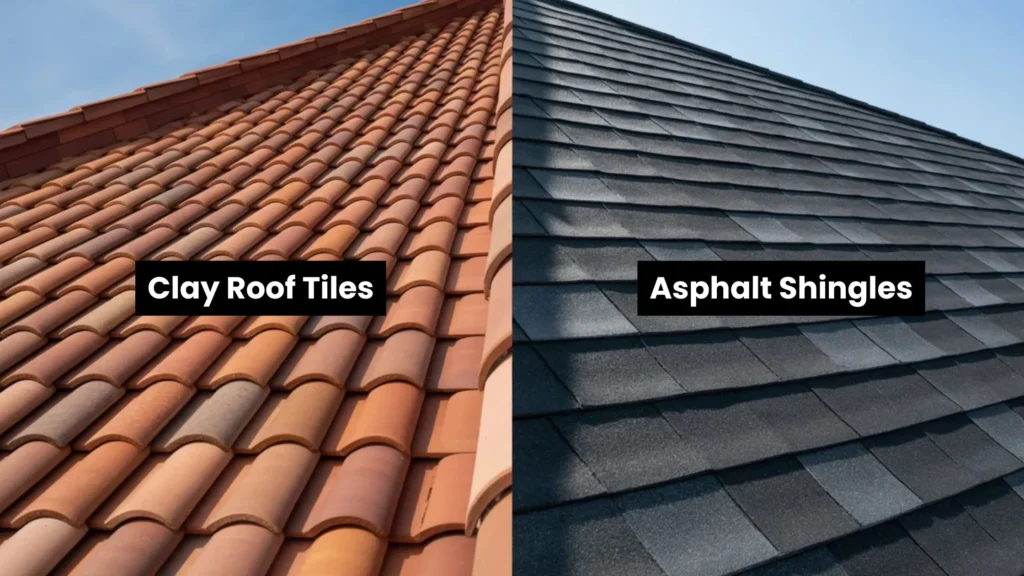
If you’re planning a roof replacement, one of the first questions homeowners ask us is: “Should I go with clay roof tiles or asphalt shingles?”
It’s a great question and the answer isn’t always straightforward. As a roofing company, we’ve installed and repaired both systems over the years. Each has strengths, drawbacks, and ideal use cases depending on your budget, climate, home design, and long-term goals.
In this guide, we’ll break down clay roof tiles vs asphalt shingles, so you can make a confident decision without feeling overwhelmed.
Quick Overview: Clay Tiles vs Asphalt Shingles
Before diving deep, here’s a simple side-by-side snapshot:
| Feature | Clay Roof Tiles | Asphalt Shingles |
| Lifespan | 50–100 years | 20–30 years |
| Upfront Cost | High | Affordable |
| Weight | Heavy | Lightweight |
| Maintenance | Low | Moderate |
| Appearance | High-end, classic | Versatile, modern |
| Climate Performance | Excellent in heat | Good in most climates |
Now let’s unpack what really matters.
What Are Clay Roof Tiles?
Clay roof tiles are made from natural clay that’s molded and kiln-fired at high temperatures. You’ll often see them on Mediterranean, Spanish, or Southwestern-style homes, but they’re becoming more popular in other architectural designs as well.
According to the Tile Roofing Industry Alliance (TRIA), properly installed clay tile roofs can last 75 years or longer, making them one of the longest-lasting roofing materials available.
Pros of Clay Roof Tiles
- Exceptional Longevity
Clay tiles can outlast asphalt shingles by decades. Many tile roofs installed 50+ years ago are still performing well today. - Heat and Fire Resistance
Clay tiles are non-combustible and perform extremely well in hot climates. They reflect heat instead of absorbing it, which can help reduce cooling costs. - Low Maintenance
Clay tiles don’t rot, warp, or attract insects. Occasional inspections are usually all that’s needed. - Timeless Curb Appeal
There’s no denying the visual impact. Clay tiles add character, depth, and resale value to a home.
Cons of Clay Roof Tiles
- Higher Upfront Cost
Clay tiles cost significantly more than asphalt shingles, both in materials and labor. - Structural Requirements
Because clay tiles are heavy, some homes need structural reinforcement before installation. - Specialized Installation
Tile roofing requires experienced installers. Improper installation can lead to cracked tiles or leaks.
What Are Asphalt Shingles?
Asphalt shingles are the most common roofing material in the U.S., largely due to affordability and versatility. They’re made from a fiberglass base coated with asphalt and mineral granules.
The National Roofing Contractors Association (NRCA) notes that asphalt shingles typically last 20–30 years, depending on product quality and local weather conditions.
Pros of Asphalt Shingles
- Budget-Friendly
Asphalt shingles are one of the most affordable roofing options, making them ideal for homeowners working within a tighter budget. - Easy Installation and Repairs
Most roofing contractors are highly experienced with asphalt systems, which keeps labor costs down and repairs simple. - Wide Variety of Styles
Modern asphalt shingles come in many colors and textures, including architectural and dimensional options that mimic wood or slate. - Lightweight Material
No additional structural support is usually needed.
Cons of Asphalt Shingles
- Shorter Lifespan
Even high-quality shingles won’t last as long as clay tiles. - More Maintenance Over Time
Granule loss, curling, and storm damage are more common compared to tile roofing. - Heat Absorption
Asphalt shingles tend to absorb heat, which can raise attic temperatures and energy costs in warmer climates.
Which Roofing Option Is Better for Arkansas Homes?
This is where local experience matters.
In Arkansas and surrounding regions, we see heat, humidity, storms, and occasional hail. Asphalt shingles perform well when properly installed and maintained, especially impact-resistant options. Clay tiles excel in heat resistance but require the right structure and professional installation.
Choose Clay Roof Tiles If:
- You plan to stay in your home long-term
- You want a premium, long-lasting roof
- Your home structure can support the weight
- You prefer low maintenance over decades
Choose Asphalt Shingles If:
- You need a cost-effective solution
- You want faster installation
- You may sell the home within 10–20 years
- You want flexibility in color and style
Cost Comparison: Short-Term vs Long-Term Value
While clay tiles cost more upfront, they often win in lifetime value. Asphalt shingles cost less initially but may require replacement two or three times during the lifespan of one clay tile roof.
That’s why we always help homeowners compare total ownership cost, not just installation price.
Final Thoughts From a Roofing Professional
There’s no universal “best” roofing material—only the best choice for your home and goals. Clay roof tiles and asphalt shingles both have their place. The key is understanding the trade-offs and working with a contractor who explains them honestly.
At Hostetler Roofing, we believe in helping homeowners make informed decisions not pressured ones.
If you’re considering a roof replacement or want an expert opinion on what works best for your home, call your trusted Roofing Contractor in Arkansas at (870)-557-4797. We’re happy to walk you through your options and provide a no-pressure inspection.
Your roof protects everything underneath it. Choosing the right material makes all the difference.
You May Also Like To Read: How to Choose the Best Metal Roofing Contractor