
Your roof is your home’s first line of defense. It takes the heat, the storms, the wind, and sometimes hail that feels like it’s falling sideways. So when you notice bumps, dark spots, or missing granules, the big question becomes:
Is this roof blistering… or hail damage?
Getting that answer wrong can cost you thousands especially if insurance is involved.
If you're unsure what you're looking at, this is exactly the kind of situation where Hostetler Roofing can help. We provide professional free roof inspections across Arkansas and the Ark-La-Tex region and can determine whether you're dealing with blistering, hail damage, or something else entirely. A proper inspection now can save you major expenses later.
Let’s break it down clearly.
Why Proper Roof Diagnosis Matters
You wouldn’t treat a sprained ankle the same way you’d treat a fracture, right? The same logic applies here.
Blistering and hail damage may look similar from the ground. But their causes, insurance implications, and repair methods are very different.
Misdiagnosis can mean:
-
- A denied insurance claim
- Paying out of pocket for covered damage
- Premature roof replacement
Accuracy matters.
What Is Roof Blistering?
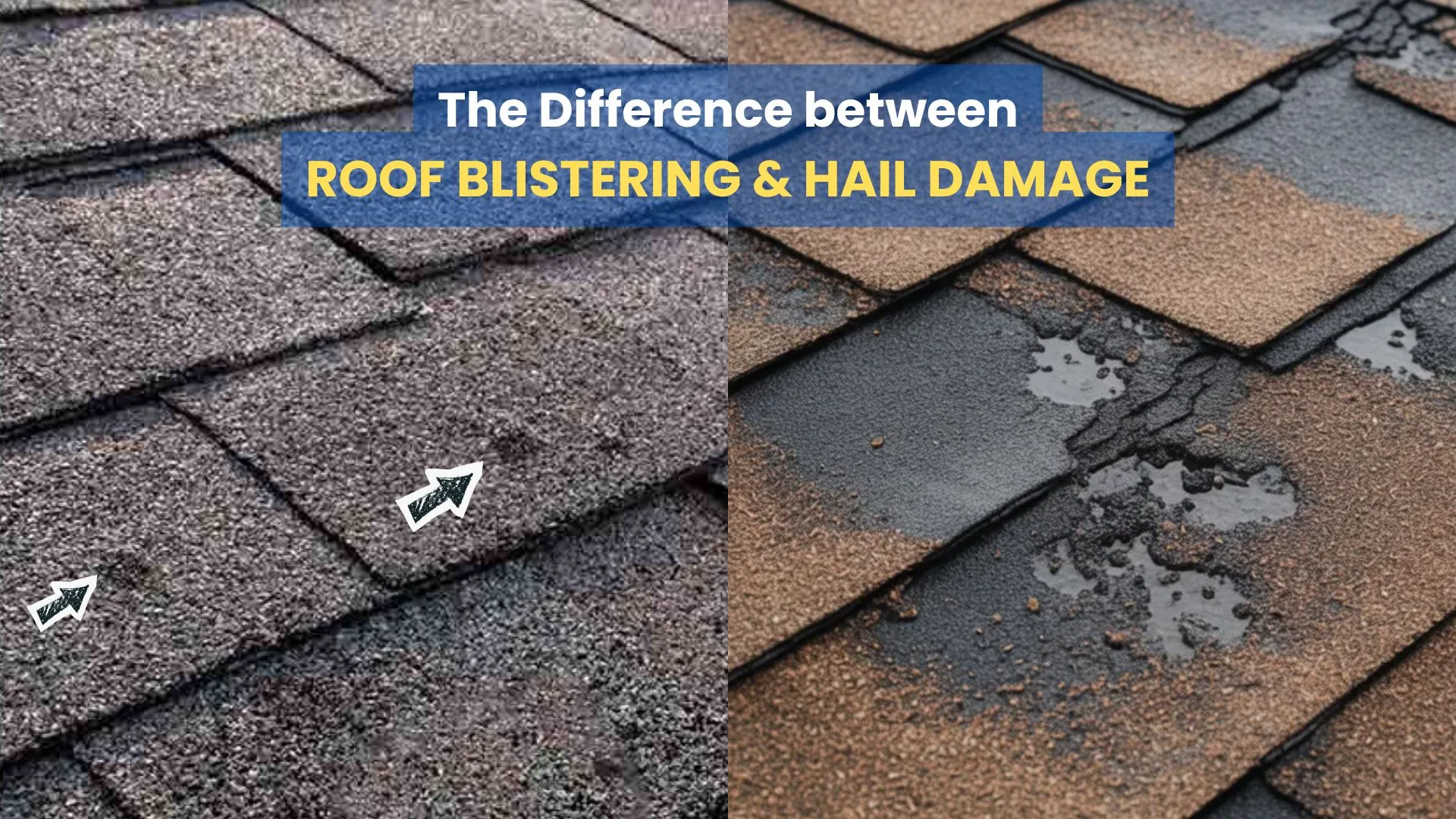
Roof blistering appears as small raised bubbles on asphalt shingles. Sometimes they’re intact. Sometimes they’ve popped and left behind small craters.
How Roof Blisters Form?
Blisters form when moisture or gases become trapped inside the layers of a shingle. When the sun heats the roof, pressure builds. The trapped moisture expands. A bubble forms.
Over time, those bubbles may burst, exposing the asphalt beneath.
Common Causes of Roof Blistering
Blistering is usually related to heat, ventilation, or manufacturing issues.
Poor Ventilation
An overheated attic can “cook” shingles from underneath, accelerating blister formation.
Manufacturing Defects
Occasionally, shingles may leave the factory with minor inconsistencies that contribute to blistering.
Trapped Moisture
Improper storage before installation can also allow moisture to get sealed inside the shingle layers.
Blistering tends to be random and evenly spread — not concentrated in one storm-facing area.
What Is Hail Damage?
Hail damage is impact damage. It’s immediate. It’s forceful. And it often happens in minutes.
How Hail Impacts Roofing Materials
When hailstones hit shingles, they displace granules, bruise the mat underneath, and sometimes crack the shingle entirely.
Unlike blistering, hail damage is event-driven. It’s tied to a specific storm.
Signs of Hail Damage on Shingles
Here’s what to look for:
Granule Loss
Hail knocks granules off in circular, defined areas. You may see darker asphalt exposed.
Bruising
Press gently on a suspected area. If it feels soft or spongy, that’s likely hail bruising.
Cracked Shingles
Larger hail can create visible fractures.
You may also notice:
-
- Dented gutters
- Damaged metal vents
- Dings in downspouts
These are strong indicators of hail activity.
Key Differences Between Roof Blistering and Hail Damage
This is where clarity matters most.
Visual Differences
Blistering usually begins as raised bubbles. Hail damage creates impact marks — dents or depressions.
Texture Differences
Blisters feel brittle. Hail bruises feel soft beneath the surface.
Pattern of Damage
Blistering is scattered and random. Hail damage often follows wind direction and storm patterns.
If your neighbor is filing a hail claim and you see similar signs, that’s a major clue.
Not Sure Which One You’re Dealing With? Here’s What To Do
This is where homeowners get stuck. From the ground, everything looks similar. And climbing onto your roof isn’t worth the risk.
This is the perfect time to call Hostetler Roofing.
Our team provides honest, detailed roof inspections. If it’s hail damage, we document it properly for insurance. If it’s blistering, we’ll explain your options clearly. No pressure. No guesswork. Just straight answers.
Catching the issue early can mean the difference between a simple repair and a full replacement.
Insurance Claims: Blistering vs. Hail Damage
Here’s the hard truth:
Most insurance policies cover hail damage because it’s sudden and accidental.
Blistering? Typically not covered. It’s often considered a product or ventilation issue.
That’s why documentation is critical.
Documentation Tips
-
- Take clear photos after a storm
- Note the date of the weather event
- Check for collateral metal damage
- Schedule a professional inspection quickly
The sooner it’s evaluated, the better your claim position.
Prevention Strategies
You can’t stop hail. But you can strengthen your roof.
Proper Ventilation
Balanced attic ventilation reduces heat buildup and lowers blistering risk.
Impact-Resistant Shingles
Upgrading to impact-rated shingles can significantly reduce hail damage severity.
Annual Inspections
A yearly inspection keeps small issues from becoming major headaches.
Think of it like routine maintenance on your vehicle. Small checkups prevent big breakdowns.
Repair vs. Replacement: What’s the Right Move?
Not every situation requires a new roof.
Minor Blistering
If it’s limited, repairs may extend the life of the roof.
Widespread Hail Damage
If bruising is extensive, replacement is often the smarter long-term decision — especially when insurance covers it.
A patched hail-damaged roof can become a weak link in future storms.
The Long-Term Risks of Ignoring Roof Damage
Blistering left untreated can accelerate shingle aging.
Hail damage left unaddressed can lead to:
-
- Leaks
- Mold growth
- Structural wood rot
- Insulation damage
Small surface issues can quietly turn into interior damage. And once water gets in, the repair bill multiplies.
Conclusion
Roof blistering and hail damage may look alike, but they’re very different problems.
Blistering is typically heat and moisture-related. Hail damage is sudden and impact-driven.
One is usually not covered by insurance. The other often is.
The key is accurate diagnosis.
If you’re seeing unusual spots on your roof or you recently experienced a storm — don’t guess. Let Hostetler Roofing inspect it properly. We serve Arkansas and the Ark-La-Tex region with honest evaluations, clear communication, and dependable roofing solutions.
Schedule your roof inspection today. It’s better to know than to assume.
You May Also Like To Read: Clay Roof Tiles vs Asphalt Shingles: Which Roofing Option Is Right for Your Home